
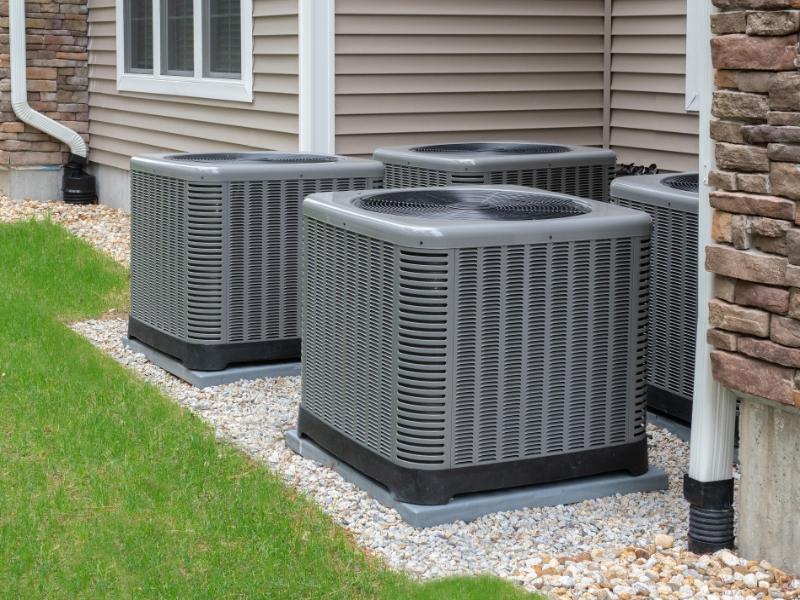
You’ve heard the term central air conditioning, but how many homeowners know what it is? Once you read the definition, it will all make sense to you.
Central air conditioners works differently from other types of AC units and heat pumps. These units cool an entire home by chilling outdoor air and then distributing it throughout yout home using ductwork and vents.
- Delivers uniform temperatures across every room simultaneously
- Uses your property’s existing network of vents to circulate chilled air
- Systems available for homes up to heavy-duty commercial buildings
Are you considering getting a central air conditioner? Our experts at K&B Energy Solutions can help match your home or facility with the ideal unit. Call 734-666-0101 or contact us online today to get the process started!
3 Benefits of Central Air Conditioning
For many people, central air is the gold standard of cooling systems because it offers building-wide temperature control. Yet despite its popularity, other property owners understand what distinguishes this option from other cooling methods.
Understanding how your equipment operates is the first step toward getting the indoor comfort you seek. Here are the three most important things you should know about central air:
1. Defining the Central Air System
Known as central AC or whole-house cooling, these systems live up to their name. Perhaps the biggest benefit is that you have a single AC unit that efficiently cools your entire home rather than multiple appliances in each room.
Whether installed in a residential home or a light commercial office, central cooling relies on these two things:
- An outdoor condenser unit that dispels heat
- An indoor evaporator coil cools the air
Localized window units and ductless mini-splits only cool isolated zones. Central AC delivers uniform, building-wide climate control from a centralized unit.
2. Cooling Using Your Existing Ductwork
Unlike ductless mini-splits or wall units, it relies on your home’s hidden network of supply and return ducts. It also uses your furnace’s blower fan to distribute that chilled air while simultaneously pulling warm indoor air back through return vents to be re-cooled.
This is central air’s built-in advantage. It’s an incredibly efficient and aesthetically invisible choice for properties with a ducted heating layout.
3. Residential Vs. Commercial Central Air
Central air serves homes and business spaces, but the structural design varies with property size. Here are the differences you can expect between the two applications:
- Residential central air systems are typically “split systems” with the equipment divided between the yard and the basement.
- Commercial central air systems often scale up to heavy-duty packaged rooftop units (RTUs). These house components are in a weatherproof overhead cabinet that saves ground space and accommodates large square footage.
At K&B Energy, our certified technicians specialize in sizing, installing, and maintaining both footprints to ensure optimal energy efficiency.
Beat the Summer Heat With K&B Energy Solutions
When temperatures climb, having a dependable cooling source provides indoor comfort. A modern central air conditioner distributes crisp air evenly through your vents and shuts down once it reaches your desired temperature.
At K&B Energy Solutions of Livonia, Michigan, we provide professional installation and support for whole-house cooling units throughout Metro Detroit.
By now, you’re ready for a central air conditioner upgrade or some other high-efficiency cooling option. To get the help you need, call 734-666-0101 or contact us online today!